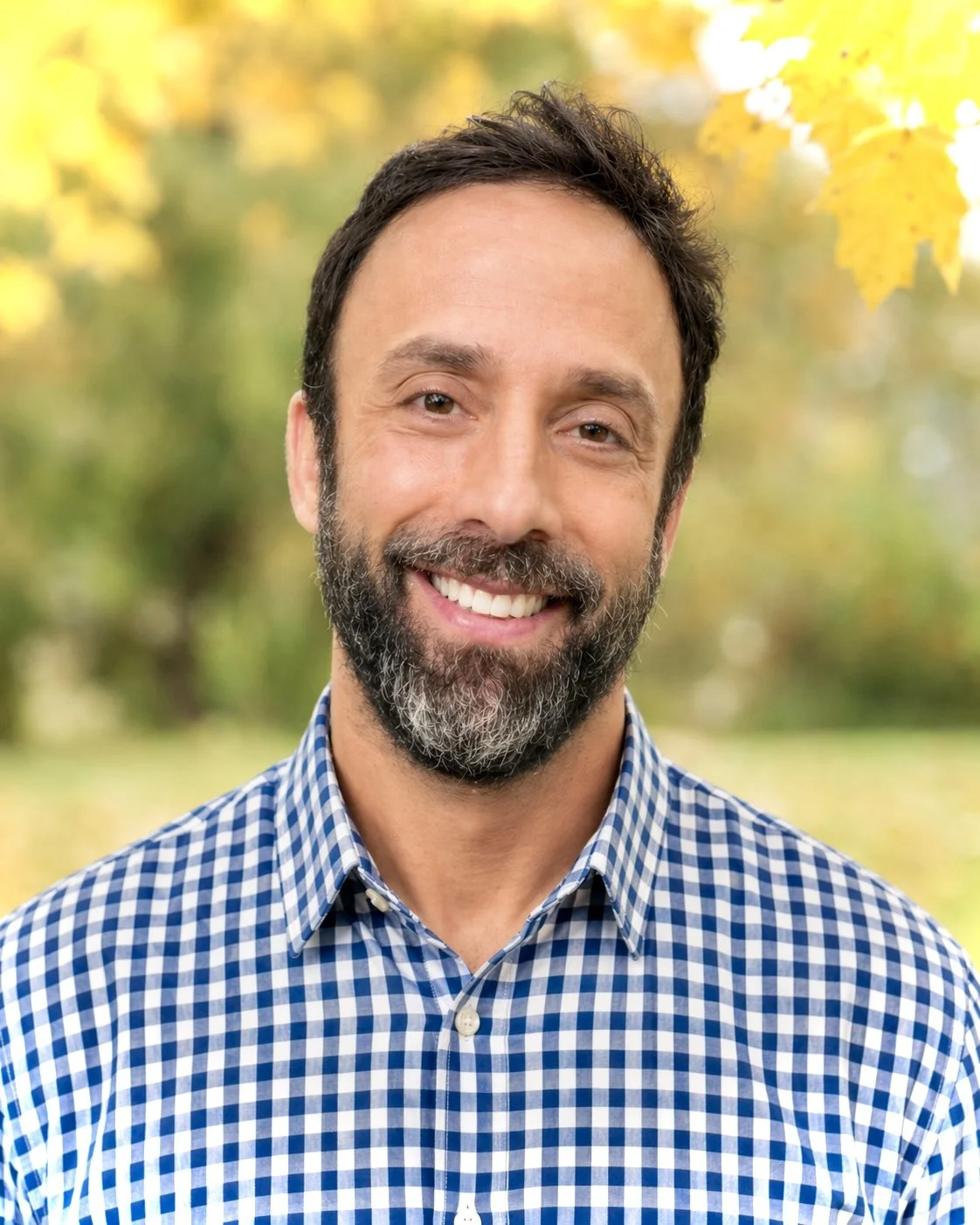
I’m a licensed psychotherapist practicing in New Hampshire, Maine, and Vermont. For more than two decades, I’ve worked with individuals, couples, and families across a wide range of settings. My current focus is helping adults navigate complex challenges such as PTSD and trauma, OCD, ADD/ADHD, and technology-related behavioral concerns, including problematic pornography use. I also facilitate men’s group work as an active part of my practice.
My work is integrative and practical. I draw from neuropsychology, mindfulness, systemic therapy, somatic psychology, Jungian-informed depth work, and positive psychology. I’m trained in Exposure and Response Prevention (ERP) and certified in Eye Movement Desensitization and Reprocessing (EMDR), and I use these approaches in a structured way to support healing, insight, and integration. By integration I mean turning toward parts of us shaped by trauma, shame, or long-held survival strategies, and bringing them back into awareness so they can be met, worked with, and reintegrated into a more whole life. At the core of my approach is a simple belief: the body plays a critical role in our overall experience. Emotions are the mind’s reading of bodily sensations. When we learn to listen to that language with more accuracy and less fear, we gain choice, steadiness, and a clearer path forward.
As Krishnamurti wrote, “It is no measure of health to be well adjusted to a profoundly sick society.” I take that seriously in the therapy room. Many symptoms are not personal failures, but psychological, cognitive, and nervous system adaptations to chronic stress, disconnection, and unrealistic demands. We name what is yours to carry and what is not, so shame loosens and agency returns. From there, we focus on what is workable: steadier regulation, clearer boundaries, values-aligned choices, and more authentic connection.
I work with couples to help shift out of reactive cycles and into deeper connection, accountability, and repair. I draw from Emotionally Focused Therapy (EFT), which focuses on creating secure emotional bonds, and Relational Life Therapy (RLT), which emphasizes directness, relational responsibility, and transformative honesty. We slow the cycle down, name what is happening underneath the conflict, and build repeatable repair that actually holds up in daily life.
I also specialize in working with individuals and couples impacted by ADD/ADHD. I conceptualize ADHD through a neurodiversity lens: a different way of regulating attention, emotion, and the body, with real strengths and real challenges. When ADHD goes unnamed or misunderstood, it can create chronic frustration, miscommunication, and disconnection. Together, we clarify patterns, reduce shame, and design practical supports that fit the rhythms of the ADHD nervous system, so trust and follow-through can rebuild over time.
Men’s work is another core part of my practice. I lead a men’s group called The Icarus Initiative for men who are ready to do the deep work of emotional growth, relational repair, and embodied presence. In individual therapy and group work, we use Jungian masculine archetypes as a map for understanding shadow patterns and strengthening emotional intelligence. The aim is not self-improvement as performance, but integration: becoming more whole, more accountable, and more able to love and be loved without leaving parts of yourself behind. As Jung wrote, “One does not become enlightened by imagining figures of light, but by making the darkness conscious.”
In addition to clinical work, I provide trainings and presentations on digital screen use and digital wellness for schools, hospitals, and community organizations, and I consult with families navigating the impact of screen time on attention, mental health, and relationships. I approach technology misuse systemically, understanding individuals as part of a broader ecology that includes families, peer networks, and digital environments. My work is grounded in Self-Determination Theory, supporting autonomy, connection, and competence, and informed by Motivational Interviewing, which helps people build motivation from within rather than through shame or control.
I envision a future where humanely designed technology supports more connected, intentional, and satisfying lives. In that future, the demand for therapists like me would shrink considerably, so I’m also quietly rooting for generous unemployment benefits, free college education, and great career counseling.
When I’m not working, you’ll likely find me walking our three dogs, feeding goats or collecting eggs from the chicken coop, and playing board games with my family. We have one very vocal cat, and I still carry the guilt of not giving her enough attention.